English English  Française Française
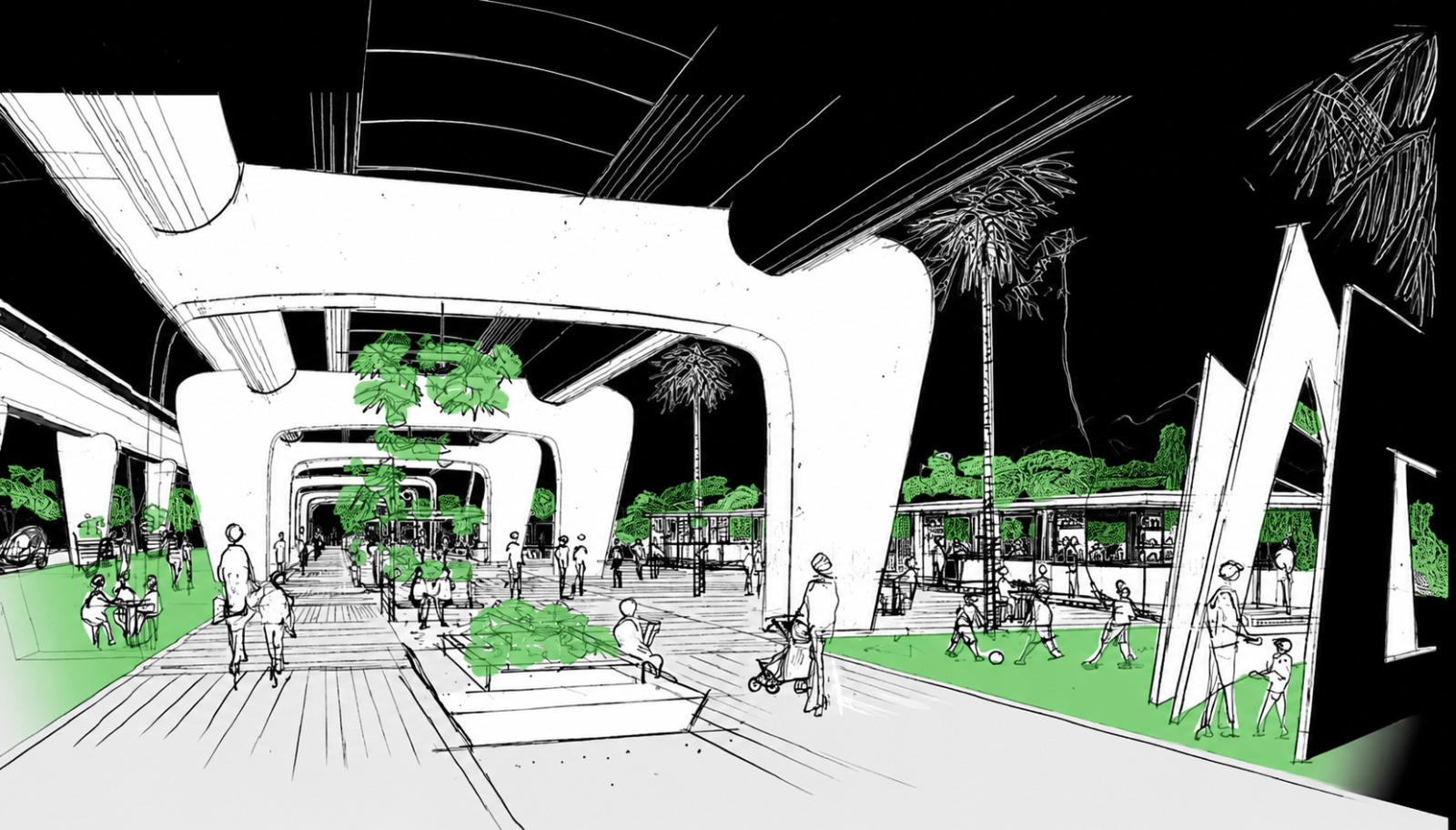
5 TOPICS FOR THE URBAN AGENDA IN THE FIRST HALF OF THE 21st CENTURY Urbanity, according to the Spanish anthropologist Manuel Delgado, implies a lifestyle characterized by mobility, the agitation as source of social vertebracy and by the proliferation of interwoven relations. Society that usually moves, and, sometimes mobilizes itself. Thinking about new urbanity implies to consider that nowadays society claims for better social and territorial justice, regarding the benefits of living in the city, so that everyone could enjoy access to the advantages of “urbanity”. And according to Michel de Certeau, the French thinker, one can say that the city and its theory never coincide, however, they tend to their progressive symbiosis. Indeed, structuring the city is both thinking the plurality of the real, and giving effectivity to this thought of the plural: it is knowing how to do it and being able to articulate it. This is why, according to myself, the ”architecturbanist” as one word, has to be a linker, a maker of connections inside the divided city and society. How to make these ontologically diverse societies, characterized by division and heterogeneity, an “intelligible whole” on which be possible to act with democratic criteria, considering that they are affected by economic, political, social, religious and gender conflicts, which are present either on the level of the State, in culture and in the city? How to contribute in creating “collective wills” in which the project can achieve its activating role? The “social role” of the architect precisely consists in adding coherence to diffuse social demands, giving it a visibility that enables action. New urbanity, as a contribution to the activation of social life, implies articulating central and parts sectors of the city, intercepting physical, economic, cultural and ecological issues, with citizen’s security conditions and contemporary subject problematics. The question is: what type of socio-spatial condensers do we need today? Capable of conjugating work and income generation centers, sports facilities, leisure and arts, at a human scale, configuring new attractors of common living? New urban "commmons" of the 21 st century? Interconnecting centralities? Which are the forms of habitability and urbanity, capable of generating social cohesion? Rearticulating the territory? In which manner can the architect urbanist make connections to generate interwoven relations, warp fabrics? THE URBAN AGENDA, implies to elaborate the link between buildings and urban fabrics mediated by walkways and public spaces, because every building has a private part and a public sphere, and the question is how to develop this public responsibility, specially the relation with the ground floor (pedestrian domain) configuring at the same time “sensitive aggregates” and the contribution to the definition of the “urban common domain”; THE SOCIAL AGENDA, in relation to the role of the architect urbanist as an activist and mediator between public and private, the social agenda implies to consider the existing centralities and the logic of the city simultaneously, linking social networks to the urban (territorial base), generating new centralities. In this sense, the architect is a connexionist, a connection maker, contributing to the “political therapeutics”, according with Jacques Derrida; THE SUSTAINABLE AGENDA - in the specific area of the urban-architectural-landscape, eco-conception assumes acting bioclimatically, in other words, according to the conditions of climate cartography. THE INFORMAL AGENDA - Dealing with the informal areas of the city implies reading the structure of each place of acting, listening to the demands, and to make the interdisciplinary crossing as a way of consistant approaching. THE DIGITAL AGENDA - The premise of computational approach as assistant of the design process, is to have a reliable data base (topographic, social, climate variations, economic, context, and so on). Starting from the existent, the design should respond to all the variables that intervene in the issues to be considered, relating simultaneously the macro (the city) with the micro (the specific location). This implies the consideration of the consequences of various possibilities of solutions, as a help to make decisions, for both public and private, and as a help to make community members aware of their responsibilities, and thus, able to take part in the process. Jorge Mario Jáuregui
L’urbanité, selon l’anthropologiste espagnol Manuel Delgado, implique un mode de vie caractérisé par la mobilité, avec l’agitation comme source de phénomène social et par la prolifération de relations entrelacées. Penser la nouvelle urbanité implique de devoir considérer que de nos jours la société réclame une meilleure justice sociale et territoriale, en considérant les avantages de vivre en ville, afin que tout le monde puisse accéder et profiter aux avantages de l’« urbanité ». Selon Michel de Certeau, le penseur français, on peut dire que la ville et sa théorie ne coincident jamais, toutefois, elles tendent progressivement à leur symbiose. Effectivement, structurer la ville est penser à la fois la pluralité du réel et donner l’effectivité à cette pensée du pluriel : c’est savoir comment le faire et être capable de l’articuler. C’est pour cela que, selon moi, l’« architecteurbaniste » en un seul mot, doit être un médiateur, un générateur de connexions à l’intérieur d’une ville et d’une société divisée. Comment faire de ces sociétés onthologiquement diverses, caractérisées par la division et l’hétérogénéité, un « ensemble intelligible » sur lequel il est possible d’agir avec des critères démocratiques, en considérant qu’ils sont affectés par des conflits économiques, politiques, sociaux, religieux et de genre, présents soit au niveau de l’État, dans la culture et dans la ville ?Comment contribuer à créer des « volontés collectives » dans lequel le projet peut accomplir son rôle. Le rôle social de l’architecte consiste présicemment à ajouter de la cohérence aux demandes sociales diffuses en lui donnant une visibilité qui plus tard permettra l’action. La nouvelle urbanité, comme contribution à la mise en place d’une vie sociale, implique d’articuler les secteurs centraux et périphériques de la ville en interceptant les problèmes physiques, économiques, culturels et écologiques, avec les conditions de sécurité des citoyens et les problématiques contemporaines. La question est : quel genre de condenseurs socio-spatial avons nous besoin aujourd’hui? Capable de conjuguer travail et centres de générations de revenus, installations sportives, loisirs et arts, à l’échelle humaine en créant de nouveaux attracteurs de vie commune ? De nouvelles « Agoras » du 21 ème siècle? Des centralités interconnectées? Quelles formes d’habitabilité et d’urbanité sont capables de générer une cohésion spatiale? En réarticulant le térritoire? De quelle manière l’architecte-urbaniste peut-il créer des connexions afin de créer des relations entrelacées, des tissus bien articulés? Jorge Mario Jáuregui
|