| Miscelâneas |
| Tambor de Crioula São Luís do Maranhão |
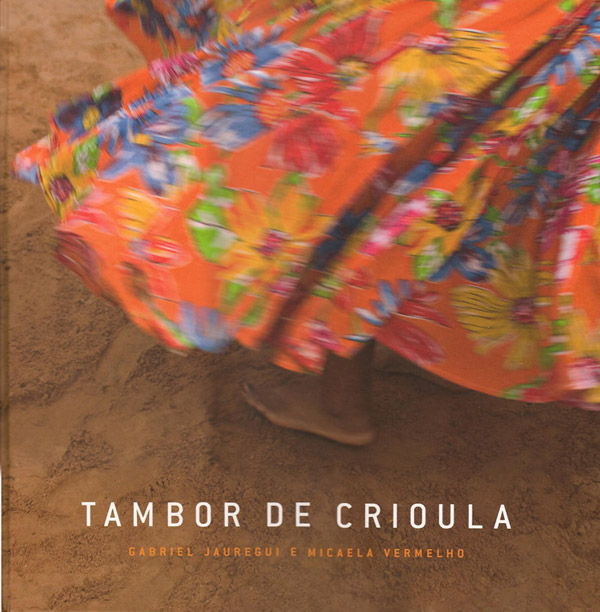
Livro ganhador de 1º Prêmio de Excelência Gráfica, na categoria "Livro de Arte e Cultura"

Compra/Buy : www.naueditora.com.br
Telefone: +55 (21) 3546-2838
E-mail: contato@naueditora.com.br / vendas@naueditora.com.br
À ESCUTA DO TAMBOR
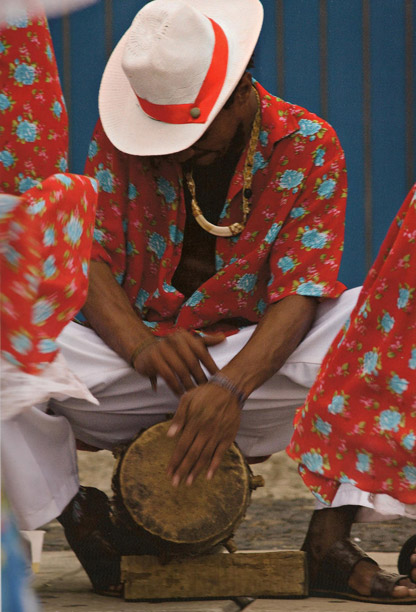
Os artistas visuais Gabriel Jauregui e Micaela Vermelho atenderam prontamente ao chamado do toque. Em busca dos elementos, tinham como intuito ressaltar o conjunto que forma a identidade ancestral dessa tradição. O “Tambor de Crioula” que apresentam destaca-se por realizar-se também a partir não de uma cartografia dos inúmeros grupos, tipos e regiões, mas por centrar-se na força da relação de convivência e reverência com pessoas que formam o grande circuito em “rede” dos grupos.
Embora houvesse uma pesquisa e roteiro sobre o que pretendiam realizar, os fotógrafos desejaram deixar-se levar por essa condição de inesperado para a ocorrência da roda: “tem tambor agora! É de promessa! Lá no Coroadinho! Amaral vai, Negão vai, Danira vai, todo mundo vai!” – disse Carla, amiga, assistente, informante, filha de Roxa. Enfrentaram os desafios da pouca luminosidade, já que muitas rodas acontecem à noite, e decidiram apesar disso dispensar o uso do flash para, segundo Gabriel Jauregui, “não interferir além do irremediável no ambiente”. As condições aparentemente desfavoráveis, tanto tecnicamente (iluminação), quanto de produção (o imediatismo do comunicado), ambos utilizados como força estética, tornando-se um fio condutor ao longo do trabalho.
É preciso que se ressalte que há aqui um ponto de vista coletivo:
“Essas fotos são imagens realizadas a quatro mãos e duas cabeças. Eu e Gabriel nos propusemos à autoria em conjunto. Não importa quem produziu essa ou aquela foto. Elas são resultado do que foi discutido e pensado entre nós previamente e da maneira que decidimos abordar o assunto.” – explica Micaela Vermelho.
Há um compromisso com uma forma de expressão estética. Não se trata de uma pesquisa formal sobre o tema. Percebe-se, a uma só vez, a força de uma simbologia transversal.
Os elementos: é a maneira como assinalam a existência dos detalhes que só podem ser vistos por um olhar atento. É o que encontramos em fotos que sinalizam a poesia de cenas de coreiras conversando; o flagrante de um sorriso; o olhar cheio de sabedoria de Mestre Felipe; o banho de bebida no couro do tambor, antes de ser aquecido pelo fogo; a fé em São Benedito; o foco de luz que revela a silhueta no meio do grande escuro da noite; os retratos conquistados; os pés; as mãos, em meio aos diversos outros elementos que perfazem todos os tambores.
A dedicação: é o modo como os fotógrafos ao longo dos três anos de desenvolvimento do projeto puderam enxergar semelhanças e especificidades entre os diversos tambores e criar suas relações de trabalho e afetividade.
A imagem: é a propriedade daquilo que só existe na possibilidade se ser como é, por condição de ser uma imagem. Vemos o Tambor de Crioula pelo olhar de Gabriel Jauregui e Micaela Vermelho. Uma fotografia vibrante, rica de significantes e símbolos agora revelados.
Cinara Barbosa
Curadora
The immanent sense of preservation is the document. Register that devises to humanity its realizations of acquaintanceship. In its turn the program for a document’s viability does not mean absolutely to sanction all to stock. Must be admitted, as prerogative to the construction of a memory, the cost of the aporias as much as the election of one reality.
It is estimated that there are nowadays more than eighty groups of Tambor de Crioula in the capital of the Maranhão State, São Luis. All can be identified by its baptism names and, even so, receive designation by reference of affective proximity, or of geographic location.
Tambor do Mestre Felipe, Tambor do Paulinho da Liberdade, Tambor do Maracanã, Tambor de Apolônio, Tambor do Pai Euclides, Tambor do Quebra-pote, Tambor de Nivô, Tambor de Leonardo, among so many others, are some of the tambores that signify constituent and distinguished elements of this Intangible Heritage that is being presented in image.
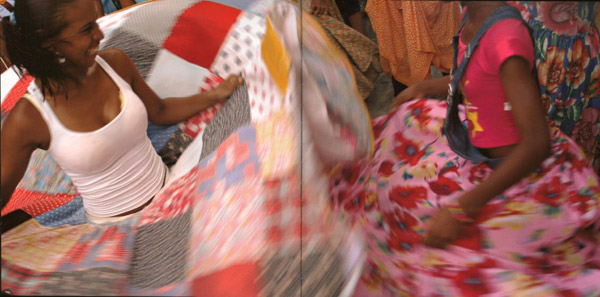
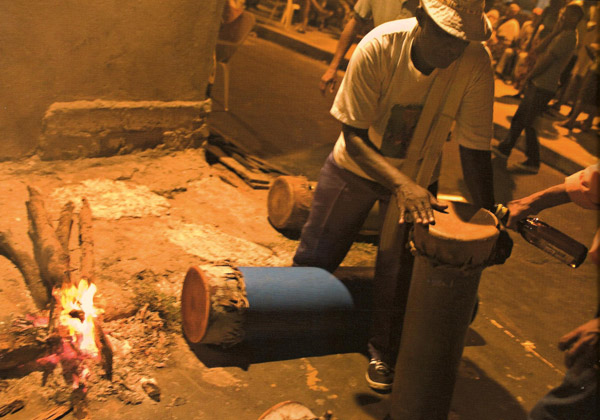
The intention on the book “Tambor de Crioula” have always been that of visually tell the history of the elements of such cultural manifestation. To show the round (roda), the dancers (coreiras) and their skirts, the players (tocadores), the singers (cantadores), the tuning of drum by fire, the pungada> 1, the beat, the dance, the ecstasy, the happiness and the devotion. “Come into the round woman”, says the song. It was necessary, therefore, to be alert to the calling of the drum, announcing a round that begins.
______________
1 Punga, pungada ou umbigada is one of the strongest elements that identifies tambor de crioula as umbigada dance. The movement, when a dancer pushes her body towards another one, is a symbolic challenge between the dancers (coreiras). It marks the exit of one coreira of the round for the entrance of the other, the one which will now dance for the big drum.
______________
The visual artists Gabriel Jauregui and Micaela Vermelho attend promptly the beat. In search of the elements, they had as aim to stand out the whole that constitute the ancestral identity of this tradition. The “Tambor de Crioula” they present stands out for being realized also from, not a cartography of various groups, kinds and regions, but to center in the strength of a relation of familiarity and reverence with the people that constitute the great circuit in ‘net’ of groups.
Because, “tambor que é tambor, tambor de ‘raiz’ mesmo, não tem hora pra começar nem pra terminar”2, is whispered in the surroundings of the round. A way of saying, from an anonymous hear, considering that is not always possible to count in advance with a program of the encounters in the rhythm of the drums’ parelha 3 . It is not in the newspaper daily program, there is no invites sent by mail or e-mail to communicate the diverse celebrations spread around the island.
______________
2 “Tambor (de crioula) that is tambor, tambor that is ‘roots’ really, doesn’t have time to begin neither to finish”.
3 Parelha is the name of the group of three drums in tambor de crioula: big, middle and riddler.
______________
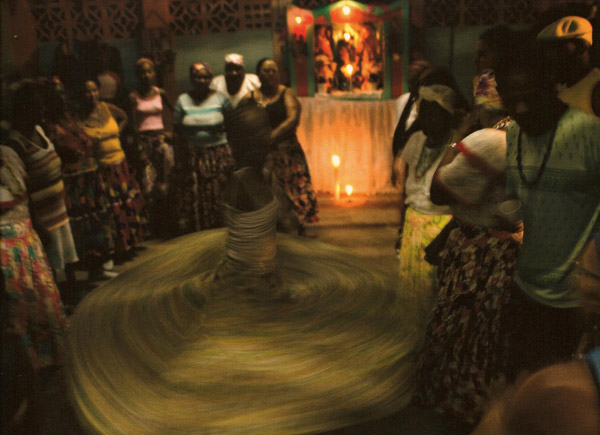
However there has been research and script on what they intend to accomplish, the photographers wished to be let taken by this condition of the unexpected on the occurrence of a round: “there is tambor now! It’s an offering one! Over there in Coroadinho! Amaral will go, Negão will go, Danira will go, everybody will go!”- said Carla, friend, assistant, informer, daughter of Roxa. They faced the challenge of low luminosity, since many rounds happen at night and decided even though, to dismiss the use of flash to, according to Gabriel Jauregui, “not to interfere beyond the irremediable in the environment”. The conditions, apparently adverse, as much technically (lightening), as of production (the immediatism of communicates), both used as aesthetic strength, taken as a leading thread along the book.
Therefore, the exercise of curatorship was based on a few directions. The first, on the way of an orchestration of the elements of Tambor already present in the achieved material, with the purpose to know and to notice the point of view taken by the photographers.
It is necessary to stand out that there is a collective point of view:
“These photographs are images taken by four hands and two minds. I and Gabriel had in our minds the collective authorship. It doesn’t mater who has taken this or that photograph. They are the result of what has been discussed and thought between us previously and the way we decided to approach the subject.” – explains Micaela Vermelho.
The second direction was to identify and stand out elements that, beyond those already established by the authors, were present, but maybe obscured or that appeared by reoccurrence, opposition and exclusivity. This means: the circuit of rounds, sometimes during the day and sometimes during the night; the surroundings of the round; the pictorial abstraction of the skirts whirl; the possibility of images’ composition in polyptyches; the ashes of the fire, among others. This way elements already and spontaneously raised in the work stand out. Other references translated in pointing out shades from the city of São Luis as an ambience of such cultural heritage.
The curatorship position has always been that of the dialogue, looking to act in the sense of interlocutory to diminish uncertainties and to stand by the photographers convictions. Even for those which were in disagreement with propositions of the curatorial action. The step of designing the book is, therefore a work discussed in group: photographers, curator and designer thinking the ‘junctions’ and ‘selections’ of images and resources as a whole.
There is a compromise with a form of aesthetic expression. It is not in the matter of formal research about the theme. The suppression of subtitles is part of a group decision that chose to avoid the numbering of pages, detailed descriptions and excessive references. It claimed to privilege a clean design and images rich of significances. And it is all there.
To Gabriel Jauregui the finishing and editing moment of the work was that of emphasizing images that account, between other factors, for the dedication which the work was accomplished:
“When I arrived at the Tambor do Quebra Pote I was contagious by the fun and energy of the coreiras that needed to make a long walk to get to tambor’s place. Some would take rides in bicycles taking their skirts rolled up in their laps. There we also took into account of the particularity of such festivity: the itinerancy of tambor that happens once a year in honor to São Sebastião, that gets around the neighborhood, stopping by the doors of those who wished to greet the passing of coreiros and coreiras. Many let in the doorsteps of their homes, usually a jack fruit and a bottle of wine as a call for the brave players that performed the praise.”
It is noted in this statement, at once, the strength of a transversal symbology.
The elements: it is the way how they distinguish the existence of details that can only be seen by a careful look. It is what we find in photographs that signalize the poetry of scenes of coreiras chatting; the snapshot of a smile; the look full of mastery of Mestre Felipe; the drink bath in the drum’s leather, before it gets warmed by the fire; the faith in Saint Benedict; the focal point of light that reveals the silhouette in the middle of the darkness of night; the portraits conquered; the feet; the hands, in the middle of diverse other elements that add up to all tambores.
The dedication: the way in which the photographers along three years of the book’s development could see similarities and specificities between the many tambores and to create their work and affective relations.
The image: it is the estate of what can only exist in the possibility of being as it is, in condition of being an image. We see Tambor de Crioula by the look of Gabriel Jauregui and Micaela Vermelho. A striking photography, rich of significances and symbols now revealed.
Cinara Barbosa
Curator